100%
of teams using the design system
16%
more development velocity
The context
Years of screens added without a shared reference had multiplied styles and components. The four interfaces no longer looked alike. Each team had its own habits, and consistency was getting impossible to maintain.
My role
I carried the project from diagnosis to adoption, with the developers and the PM. Before designing a single component, I talked to the teams. A survey for PMs and developers, interviews, a workshop with marketing and communications. I also watched a developer build a component.
The clearest pain point was the handoff. Without clear specs, each developer read the components their own way, and the gaps showed up in production.
The key decision
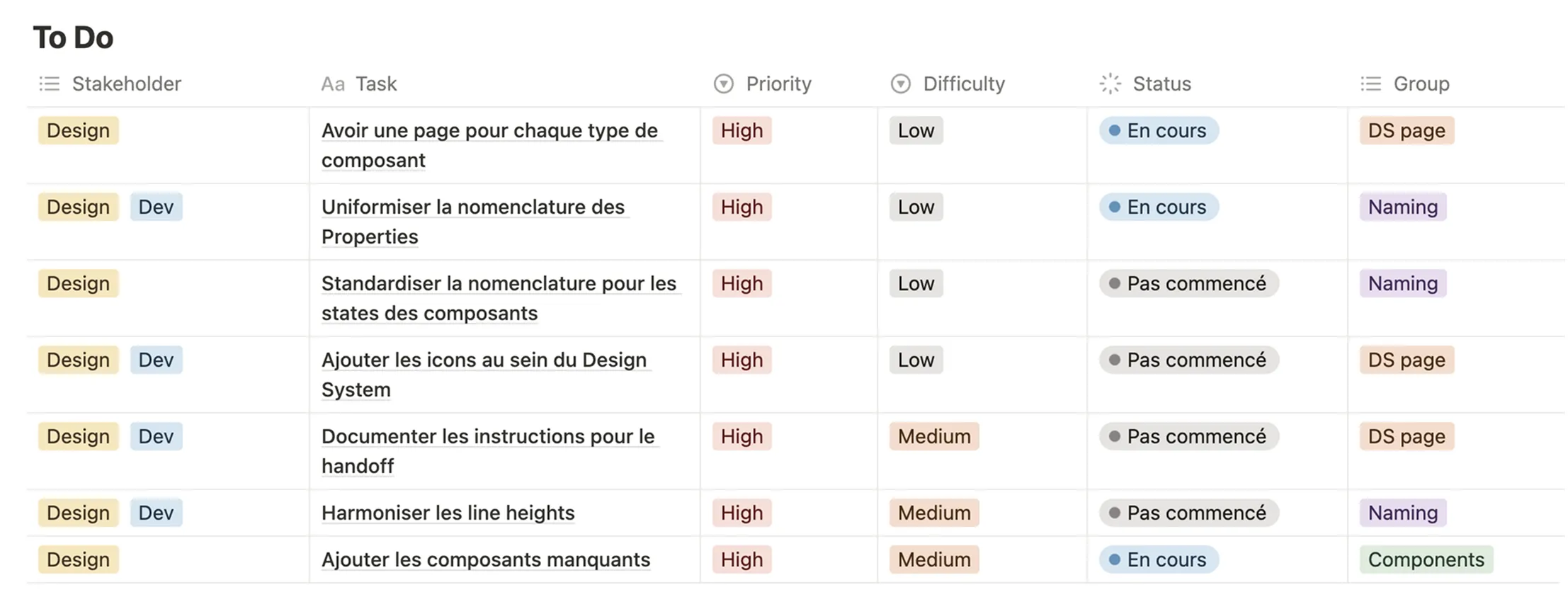
The research produced 69 insights, which I boiled down to 23 tasks ranked by impact and difficulty. That’s what the team voted on. They weren’t handed a plan, they had picked it. That’s what drove adoption.
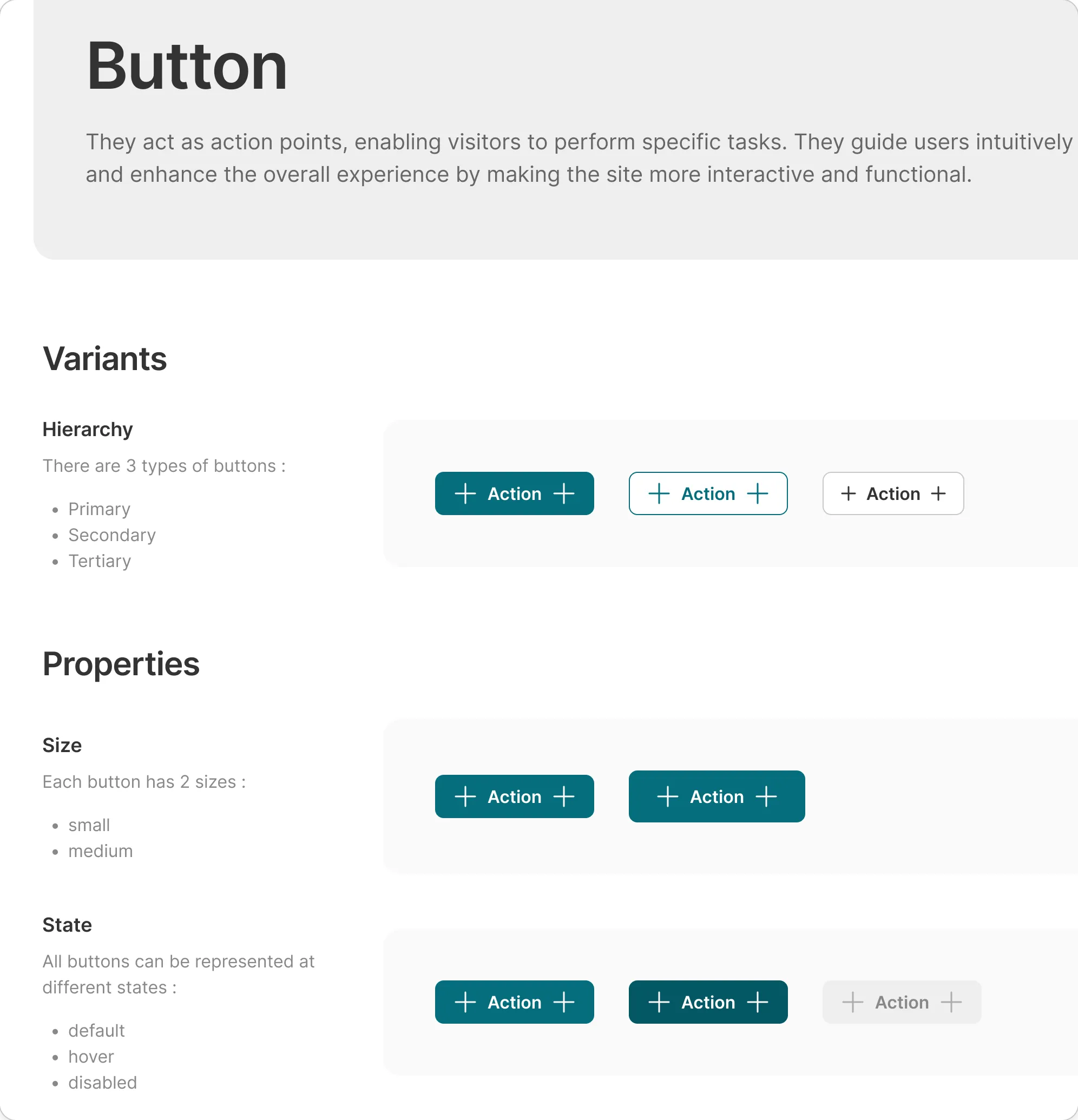
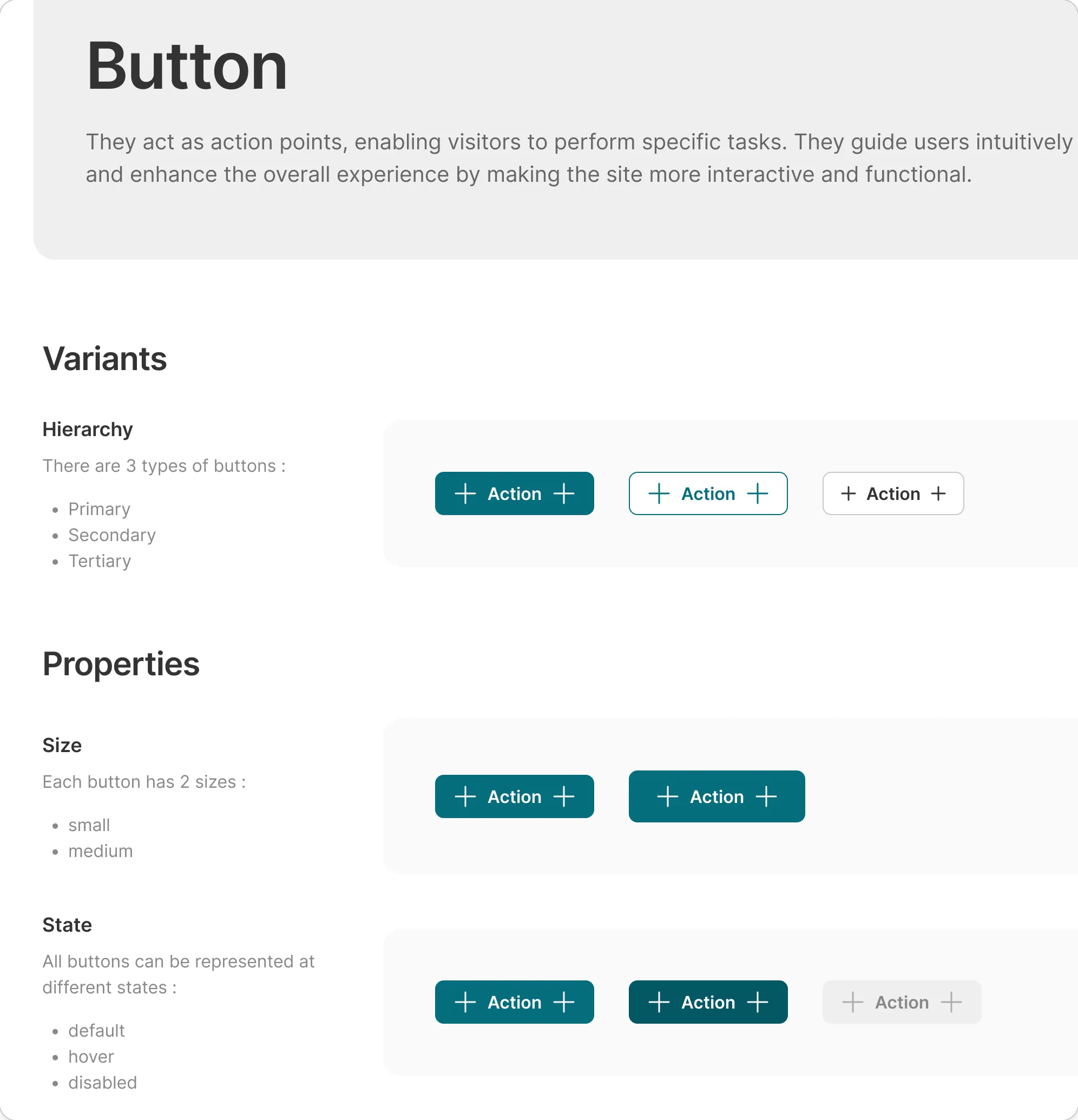
What came next kept the same rule: the most impact for the least effort. Components are sorted into atoms, molecules and organisms, with naming that reads well in code. Each one has its documentation, written for designers and developers alike.
To keep the project from sliding behind urgent work, I held a weekly check-in with the developers and the PM. Every update was announced on Slack and in the internal newsletter.
What it changed
Every team adopted the design system, and development velocity went up 16%. The four audiences now rely on a single foundation.
Looking back, I would have kept a changelog from day one. Teams would have seen the system evolve instead of discovering it.